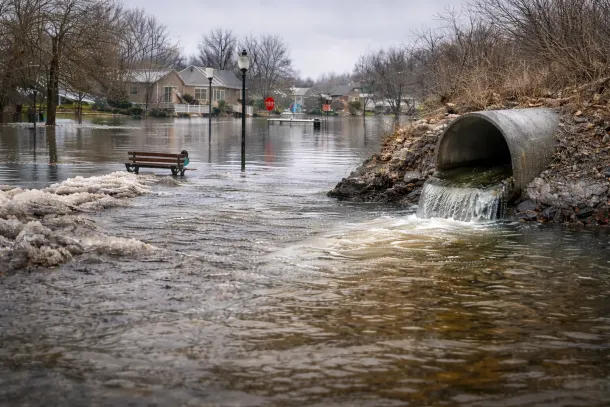
Snow Today, Flood Tomorrow: Why Winter Stormwater Prep Protects Your Property in Spring
A damp chill hung in the air. Icy rivulets from the recent rain streamed from car doors, windows, and roofs. My tires splashed through the large puddle of water covering part of several parking spaces. Pale sunlight, daring to peek through the slate-gray clouds, glinted off a sheen on top of that water. Curious, I followed the tell-tale stain backwards to its source: oily water peeked just above the grate of an overflowing oil-water separator belonging to the shop next door. I wish the shop had called our team in time…
Scenes like this are far more common than most property owners realize—and they almost always start in winter.
Why Winter Is the Most Overlooked Stormwater Season
A common misconception is that stormwater management only matters during spring rainstorms. In reality, winter is when many of the most damaging system failures begin.
Snowmelt carries sand, salt, sediment, oils, and debris into storm drains, catch basins, oil-water separators, and detention systems. Because melting occurs gradually, blockages develop silently. By the time spring rains arrive, these systems are already compromised—creating the perfect conditions for backups, flooding, and contamination.
What Snowmelt Does to Your Stormwater Infrastructure
Winter runoff introduces:
- Road sand and grit that compact inside pipes
- De-icing salts that accelerate corrosion
- Oils and automotive fluids that overload separators
- Leaves, trash, and sediment that block flow
These materials accumulate below ground where damage isn’t visible—until the first major spring storm turns hidden problems into costly emergencies.
The True Cost of Waiting Until Spring
Neglected winter systems often lead to:
- Parking lot and building flooding
- Pavement deterioration and sinkholes
- Environmental violations and fines
- Emergency cleanups that cost significantly more than preventive maintenance
What could have been a routine inspection becomes a full-scale emergency response.
What Should Be Inspected During Winter
Property owners should inspect and maintain:
- Catch basins and storm drain inlets
- Oil-water separators
- Detention and retention ponds
- Underground storm piping
- Outfall structures
Routine winter cleaning prevents blockages from solidifying and ensures systems are fully functional before spring rains arrive.
How STC Prevents Spring Emergencies
STC provides professional stormwater inspections, vactor cleaning, separator maintenance, and sediment removal services that keep your system flowing year-round—so snow today doesn’t become flooding tomorrow.
Prevent damage. Avoid violations. Protect your property.
Contact STC now to schedule winter stormwater maintenance.
A damp chill hung in the air. Icy rivulets from the recent rain streamed from car doors, windows, and roofs. My tires splashed through the large puddle of water covering part of several parking spaces. Pale sunlight, daring to peek through the slate-gray clouds, glinted off a sheen on top of that water. Curious, I followed the tell-tale stain backwards to its source: oily water peeked just above the grate of an overflowing oil-water separator belonging to the shop next door. I wish the shop had called our team in time…
Scenes like this are far more common than most property owners realize—and they almost always start in winter.
Why Winter Is the Most Overlooked Stormwater Season
A common misconception is that stormwater management only matters during spring rainstorms. In reality, winter is when many of the most damaging system failures begin.
Snowmelt carries sand, salt, sediment, oils, and debris into storm drains, catch basins, oil-water separators, and detention systems. Because melting occurs gradually, blockages develop silently. By the time spring rains arrive, these systems are already compromised—creating the perfect conditions for backups, flooding, and contamination.
What Snowmelt Does to Your Stormwater Infrastructure
Winter runoff introduces:
- Road sand and grit that compact inside pipes
- De-icing salts that accelerate corrosion
- Oils and automotive fluids that overload separators
- Leaves, trash, and sediment that block flow
These materials accumulate below ground where damage isn’t visible—until the first major spring storm turns hidden problems into costly emergencies.
The True Cost of Waiting Until Spring
Neglected winter systems often lead to:
- Parking lot and building flooding
- Pavement deterioration and sinkholes
- Environmental violations and fines
- Emergency cleanups that cost significantly more than preventive maintenance
What could have been a routine inspection becomes a full-scale emergency response.
What Should Be Inspected During Winter
Property owners should inspect and maintain:
- Catch basins and storm drain inlets
- Oil-water separators
- Detention and retention ponds
- Underground storm piping
- Outfall structures
Routine winter cleaning prevents blockages from solidifying and ensures systems are fully functional before spring rains arrive.
How STC Prevents Spring Emergencies
STC provides professional stormwater inspections, vactor cleaning, separator maintenance, and sediment removal services that keep your system flowing year-round—so snow today doesn’t become flooding tomorrow.
Prevent damage. Avoid violations. Protect your property.
Contact STC now to schedule winter stormwater maintenance.