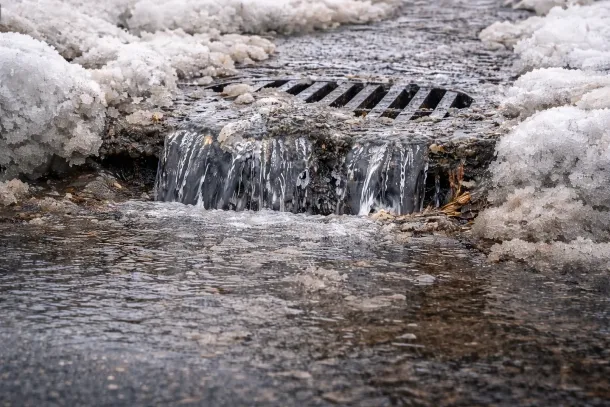
Hidden Pollution Pipeline: How Storm Drains Impact Communities
The Biggest Stormwater Myth
Many people believe storm drains carry water to wastewater treatment plants. They don’t.
Storm drains discharge directly into rivers, lakes, and streams—untreated. Every pollutant that enters a storm drain flows straight into natural waterways.
And winter is the most dangerous season for pollution loading.
Why Winter Creates the Worst Pollution Surges
As snow melts, it releases months of accumulated contaminants in a highly concentrated flow, including:
- De-icing salts
- Oil and antifreeze from vehicles
- Heavy metals from brake dust
- Sediment, trash, and debris
- Fertilizer and chemical residues
These pollutants overwhelm stormwater systems and discharge directly into local water bodies, harming aquatic life and drinking water sources.
The Environmental & Legal Impact
Unmaintained stormwater systems increase:
- Fish and wildlife toxicity
- Algae blooms and oxygen depletion
- Municipal MS4 compliance violations
- EPA fines and enforcement actions
Property owners—not municipalities—are often held financially responsible.
How Catch Basins and Separators Protect Waterways
Properly maintained stormwater infrastructure captures pollutants before they reach public waters. But when these systems are clogged or full, they lose their ability to filter contaminants—essentially turning into open pollution pipelines.
The Role of Professional Stormwater Maintenance
Professional cleaning ensures:
- Sediment is removed before it migrates downstream
- Oil-water separators function properly
- Drainage systems meet environmental compliance standards
- Communities stay protected during snowmelt surges
Protect Your Property. Protect Your Waterways.
STC provides stormwater system inspections, separator cleaning, vactor services, and sediment management to help facilities remain compliant and environmentally responsible.
Clean systems save water, money, and lives downstream.
Schedule your winter stormwater service with STC today.
The Biggest Stormwater Myth
Many people believe storm drains carry water to wastewater treatment plants. They don’t.
Storm drains discharge directly into rivers, lakes, and streams—untreated. Every pollutant that enters a storm drain flows straight into natural waterways.
And winter is the most dangerous season for pollution loading.
Why Winter Creates the Worst Pollution Surges
As snow melts, it releases months of accumulated contaminants in a highly concentrated flow, including:
- De-icing salts
- Oil and antifreeze from vehicles
- Heavy metals from brake dust
- Sediment, trash, and debris
- Fertilizer and chemical residues
These pollutants overwhelm stormwater systems and discharge directly into local water bodies, harming aquatic life and drinking water sources.
The Environmental & Legal Impact
Unmaintained stormwater systems increase:
- Fish and wildlife toxicity
- Algae blooms and oxygen depletion
- Municipal MS4 compliance violations
- EPA fines and enforcement actions
Property owners—not municipalities—are often held financially responsible.
How Catch Basins and Separators Protect Waterways
Properly maintained stormwater infrastructure captures pollutants before they reach public waters. But when these systems are clogged or full, they lose their ability to filter contaminants—essentially turning into open pollution pipelines.
The Role of Professional Stormwater Maintenance
Professional cleaning ensures:
- Sediment is removed before it migrates downstream
- Oil-water separators function properly
- Drainage systems meet environmental compliance standards
- Communities stay protected during snowmelt surges
Protect Your Property. Protect Your Waterways.
STC provides stormwater system inspections, separator cleaning, vactor services, and sediment management to help facilities remain compliant and environmentally responsible.
Clean systems save water, money, and lives downstream.
Schedule your winter stormwater service with STC today.